
सौर सेल: सौर ऊर्जा से विद्युत उत्पादन की वैज्ञानिक पृष्ठभूमि एवं विवरण
by Brijesh Kumar Patel
सूर्य के प्रकाश को बिजली में बदलने की अवधारणा 19वीं शताब्दी की है। 1839 में, फ्रांसीसी भौतिक विज्ञानी एलेक्जेंडर एडमंड बेक्वेरेल ने फोटोवोल्टिक प्रभाव की खोज की, जो सौर सेल के पीछे का मूल सिद्धांत है। इसे व्यवहारिक रूप में आने में काफ़ी समय लगा और 1954 में बेल प्रयोगशाला के वैज्ञानिकों ने पहला व्यावहारिक सिलिकॉन सौर सेल विकसित किया। इसे 1960 के दशक के दौरान अंतरिक्ष मिशनों में इस्तेमाल किया गया । सौर सेल ने 1970 के दशक में स्थलीय अनुप्रयोगों के लिए ध्यान आकर्षित करना शुरू कर दिया, जो मुख्य रूप से तेल संकट और बढ़ती पर्यावरणीय जागरूकता से प्रेरित था।
सौर सेल अब एक महत्वपूर्ण अक्षय ऊर्जा स्रोत के रूप में उभरी है, जो दुनिया भर में ऊर्जा उत्पादन और उपयोग के तरीके को बदल रही है। उनकी प्रासंगिकता कई कारकों से उपजी है।
सबसे पहले, सौर ऊर्जा बिजली का एक स्वच्छ स्रोत है जो संचालन के दौरान कार्बन डाइऑक्साइड या अन्य वायु प्रदूषकों का उत्सर्जन नहीं करती है |इस कारण यह बढ़ते जलवायु परिवर्तन के संभावित दुष्परिणामों को संबोधित करने के लिए महत्त्वपूर्ण है। दूसरा, सौर प्रौद्योगिकी देशों को अपने ऊर्जा स्रोतों में विविधता लाने और आयातित जीवाश्म ईंधन पर निर्भरता कम करने में सक्षम बनाकर ऊर्जा सुरक्षा में योगदान देती है। तीसरा, सौर प्रणालियों की विकेंद्रीकृत प्रकृति स्थानीय बिजली उत्पादन को सुगम बनाती है | अर्थात यह सौर पैनलों जैसे ऊर्जा स्रोतों को सीधे घरों, व्यवसायों या समुदायों में स्थापित करने की तथा उन्हें विद्युत उत्पादन में स्वावलंबी बनने में सहायता करती है । जैसे कि छतों पर स्थापना – जिससे ऊर्जा का व्यय कम होता है क्योंकि इसे एक जगह से दूसरी जगह ले जाना नहीं पड़ता और दूरदराज के क्षेत्रों में ऊर्जा की पहुँच बढ़ती है। अंत में, सामग्री और औद्योगिक विनिर्माण में निरंतर सुधार ने लागतों को काफी कम कर दिया है।
शुरुआती दिनों में सामग्री और तकनीकी चुनौतियों के कारण सौर सेल की दक्षता सीमित थी। दक्षता का अर्थ , सौर सेल कितनी कुशलता से सौर उर्जा को विद्युत उर्जा में परिवर्तित कर पाता है। हालाँकि,पिछले कुछ वर्षों में पदार्थ विज्ञान और उपकरण भौतिकी में निरंतर प्रगति के कारण सौर सेल की कुशलता में काफ़ी सुधार आया है। विभिन्न प्रकार के सौर सेल के विकास को जानने के लिए इस लिंक पर आप जा सकते हैं:(https://www.nrel.gov/pv/cell-efficiency)
शोध कर्ता भविष्य के लिए सस्ते, लंबे समय तक चलने वाले और पर्यावरण को हानि ना पहुँचाने वाले ऊर्जा संसाधन को बेहतर करने का सतत प्रयास कर रहे हैं।
एक शोधकर्ता के रूप में मैं इन चुनौतियों से प्रेरित हूँ। मेरा शोध इस बात को समझने पर केंद्रित है कि’ प्रकाश’, पदार्थों के साथ कैसे अंतःक्रिया करता है और इस अंतःक्रिया का उपयोग बिजली उत्पन्न करने के लिए कैसे किया जा सकता है। मैं नए पदार्थों के प्रकाशीय और इलेक्ट्रॉनिक गुणों का अध्ययन करता हूँ, विशेष रूप से यह कि वे सौर सेल में आवेश उत्पादन (Charge generation), परिवहन (Charge transport) और पुनः संयोजन (Charge recombination) को कैसे प्रभावित करते हैं |हमने सौर सेल उपकरणों के बारे में एक समीक्षा लेख प्रकाशित किया है, यदि आप पढ़ना चाहते हैं तो कृपया इस लिंक पर जाएँ :
(https://www.nature.com/articles/s41578-025-00784-4)
यह जानकारी भविष्य में बनने वाले अधिक दक्ष एवं अधिक स्थिर सौर सेल के निर्माण में उपयोगी सिद्ध हो सकती है | अपने काम के माध्यम से मेरा लक्ष्य वैज्ञानिक ज्ञान और वास्तविक दुनिया के नवाचार दोनों में योगदान देना है, जिससे स्वच्छ ऊर्जा प्रौद्योगिकियों को रोज़मर्रा के उपयोग के क़रीब लाने में मदद मिल सके।
सौर सेल समय के साथ काफी बेहतर हुए हैं। शुरू में ये मुख्य रूप से सिलिकॉन से बनाए जाते थे । बाद में वैज्ञानिकों ने कुछ पतले और लचीले सौर सेल बनाए, जिनमें सिलिकॉन, कैडमियम टेल्यूराइड (CdTe),गैलियम आर्सेनाइड (GaAs) और कॉपर इंडियम गैलियम सेलेनाइड (CIGS) जैसे पदार्थों का इस्तेमाल किया गया। इसके बाद रंजक-संश्लेषित (Dye Synthesized ) सौर सेल आए। फिर कार्बनिक सौर सेल (Organic Solar cell or Organic Photovoltaics ) आए, जो हल्के होते हैं और लचीली सतहों पर छपाई करके बनाए जा सकते हैं, ऐसे जैसे कि समाचार पत्रों की छपाई होती है।और भी बेहतर प्रदर्शन पाने के लिए वैज्ञानिकों ने अलग-अलग प्रकार के सौर सेल को एक साथ जोड़ना शुरू किया, जैसे पेरोव्स्काइट (Perovskite) और सिलिकॉन को मिलाकर टैंडम सौर सेल (Tandem Solar cell) बनाए गए। आजकल क्वांटम डॉट सौर सेल और ऐसे पैनल जो बिजली के साथ-साथ गर्मी भी पैदा करते हैं, जैसे नए विचारों पर काम किया जा रहा है। इन सभी कोशिशों का उद्देश्य है कि सौर ऊर्जा को सस्ता, ज़्यादा कारगर और अधिक उपयोगी बनाया जा सके।
यहाँ मैं ख़ासकर पेरोव्स्काइट पर आधारित सौर सेल पर बात करूँगा । पैरोस्काइट उन पदार्थों के समूह को कहा जाता है, जिनकी क्रिस्टलीय संरचना CaTiO₃ की तरह होती हैं , और इन्हें ABX₃ सूत्र द्वारा दर्शाया जाता है । जहाँ A और B विभिन्न आकारों के धनायन हैं, और X एक ऋणायन है, आम तौर पर आक्सीजन या हैलाइड। पेरोव्स्काइट सौर सेल फोटोवोल्टिक उपकरणों के उस उभरते वर्ग में से एक है, जो अपनी उच्च दक्षता और कम लागत में निर्माण के लिए जाने जाते हैं। पारंपरिक सिलिकॉन सेल के विपरीत ये अपेक्षाकृत कम तापमान पर बनाए जाते हैं , जिससे ये हल्के और लचीले सेल बनाने में कारगर होते हैं ।
सौर सेल विभिन्न परतों से मिलकर बना होता है,जैसे की चित्र 1 में दिखाया गया है । जब प्रकाश ऊपर के पारदर्शी परतों से होते हुए पेरोव्स्काइट परत तक पहुँचती है, तब पेरोव्स्काइट उसे अवशोषित करता है और एक फोटान (Photon) को इलेक्ट्रॉन और होल के युग्म (Electron-Hole pair) में परिवर्तित कर देता है। फिर इलेक्ट्रॉन, इलेक्ट्रॉन परिवहन परत (Electron Transport Layer)और होल, होल परिवहन परत (Hole Transport Layer) की ओर चले जाते हैं। इलेक्ट्रॉन परिवहन परत (ETL)और होल होल परिवहन परत (HTL) के पदार्थों का चयन ऐसा किया जाता है कि इलेक्ट्रॉन और होल का परिवहन क्रमशः ETL और HTL में आसानी से हो सके। सामान्यतः ETL के रूप में टाइटेनियम डाइऑक्साइड (TiO₂), टिन ऑक्साइड (SnO₂), और PCBM जैसे फुलरीन व्युत्पन्न शामिल हैं। और HTL के रूप में Spiro-OMeTAD, PTAA जैसे अन्य कार्बनिक अर्धचालक का उपयोग किया जाता है।
इसके बाद इलेक्ट्रॉन ETL से फ्लोरीन-डोप्ड टिन ऑक्साइड (FTO) से बनी इलेक्ट्रोड पर और होल HTL से सोने (Au) से बने इलेक्ट्रोड पर चला जाता है। अब दो विपरीत इलेक्ट्रोड पर विपरीत विद्युत आवेश (एक इलेक्ट्रोड पर धनावेश तथा दूसरी इलेक्ट्रोड पर ऋणावेश) होने के कारण दो विपरीत इलेक्ट्रोडों के बीच विद्युत विभव उत्पन्न हो जाता है और परिपथ पूरा होने पर विद्युत धारा बहने लगती है। इस तरह से प्रकाश ऊर्जा विद्युत ऊर्जा में परिवर्तित होती है।
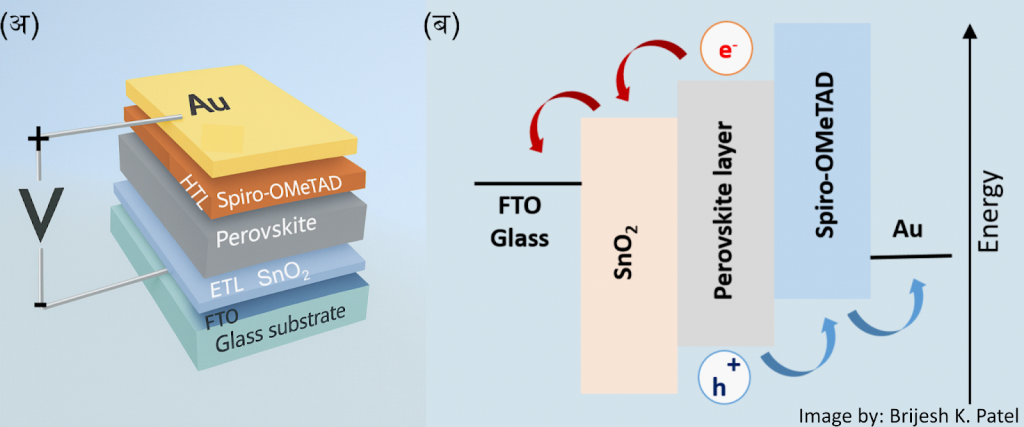
चित्र 1 : (अ) सौर सेल की विभिन्न परतें, (ब) कार्य सिद्धांत

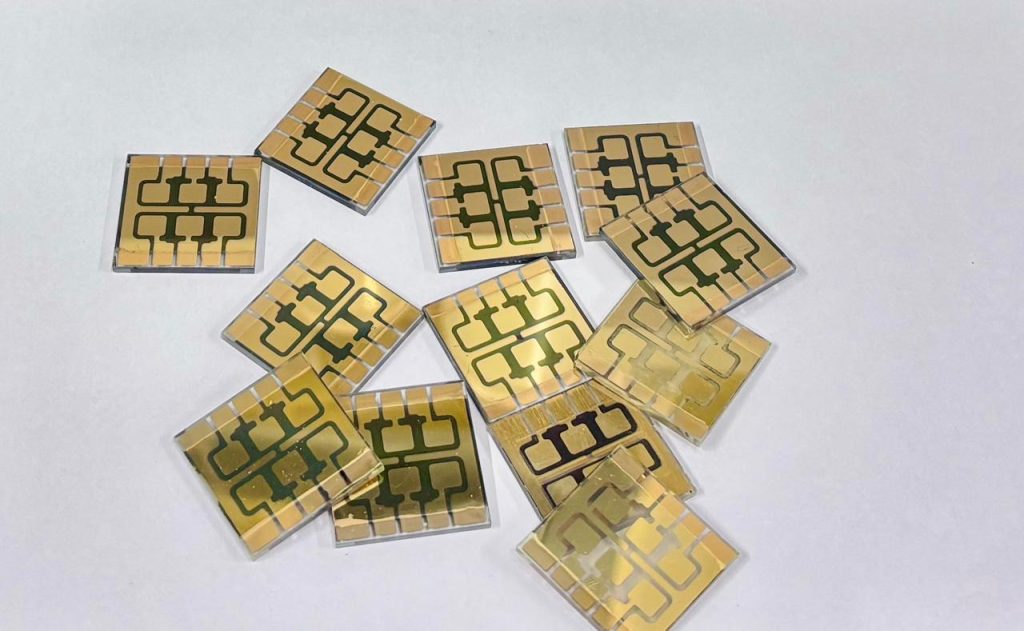
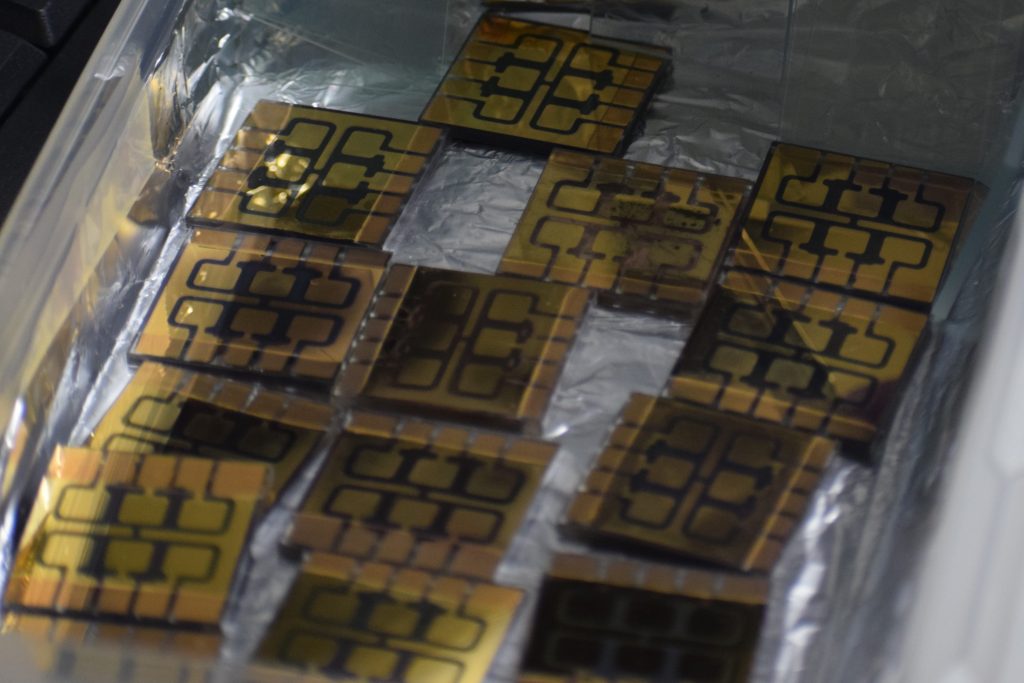
चित्र 2 (अ)स्कैनिंग इलेक्ट्रॉन माइक्रोस्कोप (SEM) से ली गई सौर सेल की विभिन्न परतों की तस्वीर दिखाती है और (ब) प्रयोगशाला में बनायी गई कुछ सोलर सेल की तस्वीरें दिखाती है ।
प्रकाश से बिजली में रूपांतरण का यह कुशल तंत्र, इसमें शामिल सामग्रियों की समायोज्यता (Tunability) और कम निर्माण लागत के साथ, पेरोवस्काइट सौर सेल को अगली पीढ़ी की फोटोवोल्टिक तकनीक के लिए एक आशाजनक उम्मीदवार बनाता है।
Translation in English
The concept of converting sunlight into electricity dates back to the 19th century. In 1839, the French physicist Alexandre Edmond Becquerel discovered the photovoltaic effect, which is the fundamental principle behind solar cells. It took considerable time for this concept to become practical, and in 1954 scientists at Bell Laboratories developed the first practical silicon solar cell. Solar cells were later used in space missions during the 1960s.
Solar cells began attracting attention for terrestrial applications in the 1970s, largely driven by the oil crisis and growing environmental awareness. Today, solar cells have emerged as an important source of renewable energy, transforming the way energy is produced and used around the world.
Their relevance arises from several factors. First, solar energy is a clean source of electricity that does not emit carbon dioxide or other air pollutants during operation. This makes it important in addressing the potential consequences of increasing climate change. Second, solar technology contributes to energy security by enabling countries to diversify their energy sources and reduce dependence on imported fossil fuels. Third, the decentralized nature of solar systems facilitates local electricity generation. In other words, energy sources such as solar panels can be installed directly in homes, businesses, or communities, helping them become more self-reliant in electricity generation. Rooftop installations, for example, reduce energy losses because electricity does not need to be transmitted over long distances, and they also increase energy access in remote regions. Finally, continuous improvements in materials and industrial manufacturing have significantly reduced costs.
In the early days, the efficiency of solar cells was limited due to material and technological challenges. Efficiency refers to how effectively a solar cell can convert solar energy into electrical energy. However, in recent years, continuous advances in materials science have significantly improved solar cell efficiency. To learn more about the development of different types of solar cells, you can visit this link:
(https://www.nrel.gov/pv/cell-efficiency)
Researchers are continuously working to develop energy sources for the future that are inexpensive, long-lasting, and environmentally sustainable.
As a researcher, I am motivated by these challenges. My research focuses on understanding how light interacts with materials and how this interaction can be used to generate electricity. I study the optical and electronic properties of new materials, particularly how they influence charge generation, charge transport, and charge recombination in solar cells. We have published a review article on solar cell devices; if you would like to read it, please visit this link:
(https://www.nature.com/articles/s41578-025-00784-4)
This knowledge may prove useful in the development of more efficient and stable solar cells in the future. Through my work, my goal is to contribute both to scientific knowledge and to real-world innovation, helping bring clean energy technologies closer to everyday use.
Solar cells have improved significantly over time. Initially, they were mainly made from silicon. Later, scientists developed thinner and more flexible solar cells using materials such as silicon, cadmium telluride (CdTe), gallium arsenide (GaAs), and copper indium gallium selenide (CIGS). After that came dye-sensitized solar cells. Then organic solar cells (Organic Photovoltaics) were developed; these are lightweight and can be manufactured by printing them onto flexible surfaces.
To achieve even better performance, scientists began combining different types of solar cells. For example, tandem solar cells have been created by combining perovskite and silicon. Currently, new ideas such as quantum dot solar cells and panels that produce both electricity and heat are also being explored. All these efforts aim to make solar energy cheaper, more efficient, and more widely usable.
Here I will focus specifically on perovskite-based solar cells. Perovskites refer to a group of materials that have a crystal structure similar to CaTiO₃ and are represented by the formula ABX₃, where A and B are cations of different sizes and X is an anion, usually oxygen or a halide. Perovskite solar cells belong to an emerging class of photovoltaic devices known for their high efficiency and low manufacturing cost. Unlike traditional silicon cells, they can be fabricated at relatively low temperatures, making them suitable for producing lightweight and flexible solar cells.
A solar cell consists of multiple layers, as shown in Figure 1. When light passes through the upper transparent layers and reaches the perovskite layer, the perovskite absorbs it and converts a photon into an electron–hole pair. The electron then moves toward the electron transport layer (ETL), while the hole moves toward the hole transport layer (HTL). The materials chosen for the ETL and HTL are such that electrons and holes can move easily through them.
Common materials used as ETLs include titanium dioxide (TiO₂), tin oxide (SnO₂), and fullerene derivatives such as PCBM. For HTLs, organic semiconductors such as Spiro-OMeTAD and PTAA are commonly used.
The electrons then move from the ETL to an electrode made of fluorine-doped tin oxide (FTO), while the holes move from the HTL to an electrode made of gold (Au). Because these two electrodes carry opposite electric charges, one positive and the other negative, an electric potential difference develops between them. When the circuit is completed, an electric current begins to flow. In this way, light energy is converted into electrical energy.
Figure 1: (अ) Different layers of a solar cell, (ब) Working principle
Figure 2: (अ) A scanning electron microscope (SEM) image showing the different layers of a solar cell, and (ब) photographs of some solar cells fabricated in the laboratory.
This efficient mechanism for converting light into electricity, combined with the tunability of the materials involved and low manufacturing costs, makes perovskite solar cells a promising candidate for next-generation photovoltaic technologies.
(Article in Hindi reviewed by Srushti Chipde.)